Why they call it the Phantom Badlands
Nobody out here says “dungeon.” They say a phantom came up — the way you’d say a storm came in.
The ground doesn’t keep what it takes. Every so often it hands the dead back, and they come up together in the shape of the place they died in: a den, a crypt, a drowned cathedral, whole enough to walk into. Then it starts bleeding — phantoms drawn to the living, working outward until they reach a town. Fifty-eight trading posts hold thin circles of safe ground. Between them, nothing is held at all. That is the Badlands.
Clear one out and you buy those people a season. Another comes up somewhere else. It always does, and that is the whole of the work — officially. What actually fills the posts with delvers is the other thing a phantom holds: down where the dead are thickest, something is still laying. Eggs come up out of those places and nowhere else, and what hatches from one bonds to whoever carried it out.
The word does double duty, which is the part nobody mentions to new arrivals. What is in there wants to make you one of its own, and given enough trips it will. Death is permanent here, and it isn’t a twist — it’s the going rate. What survives you is whatever you carried back up alive, waiting at your Sanctuary for whoever you turn out to be next.
What it looks like
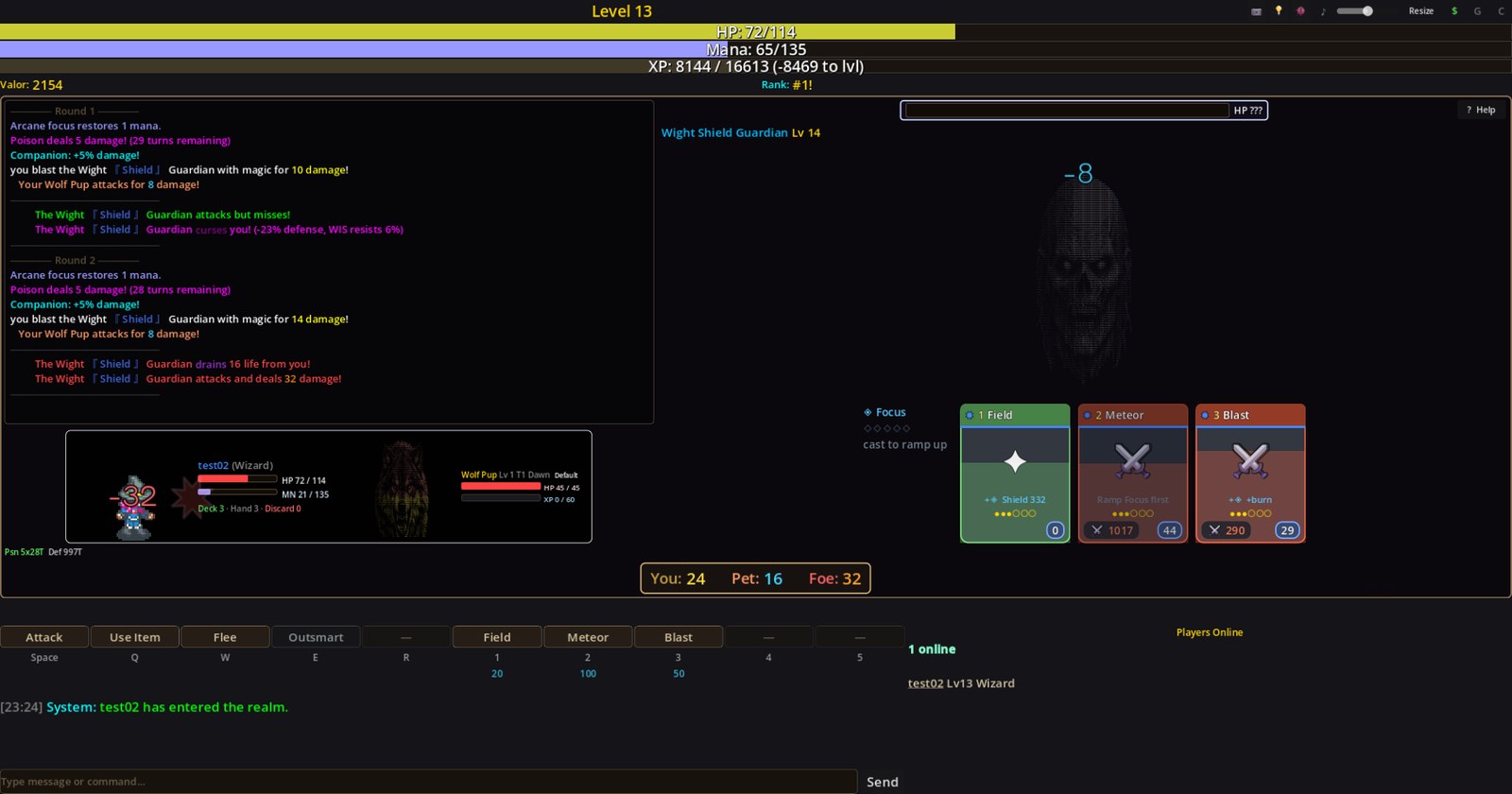
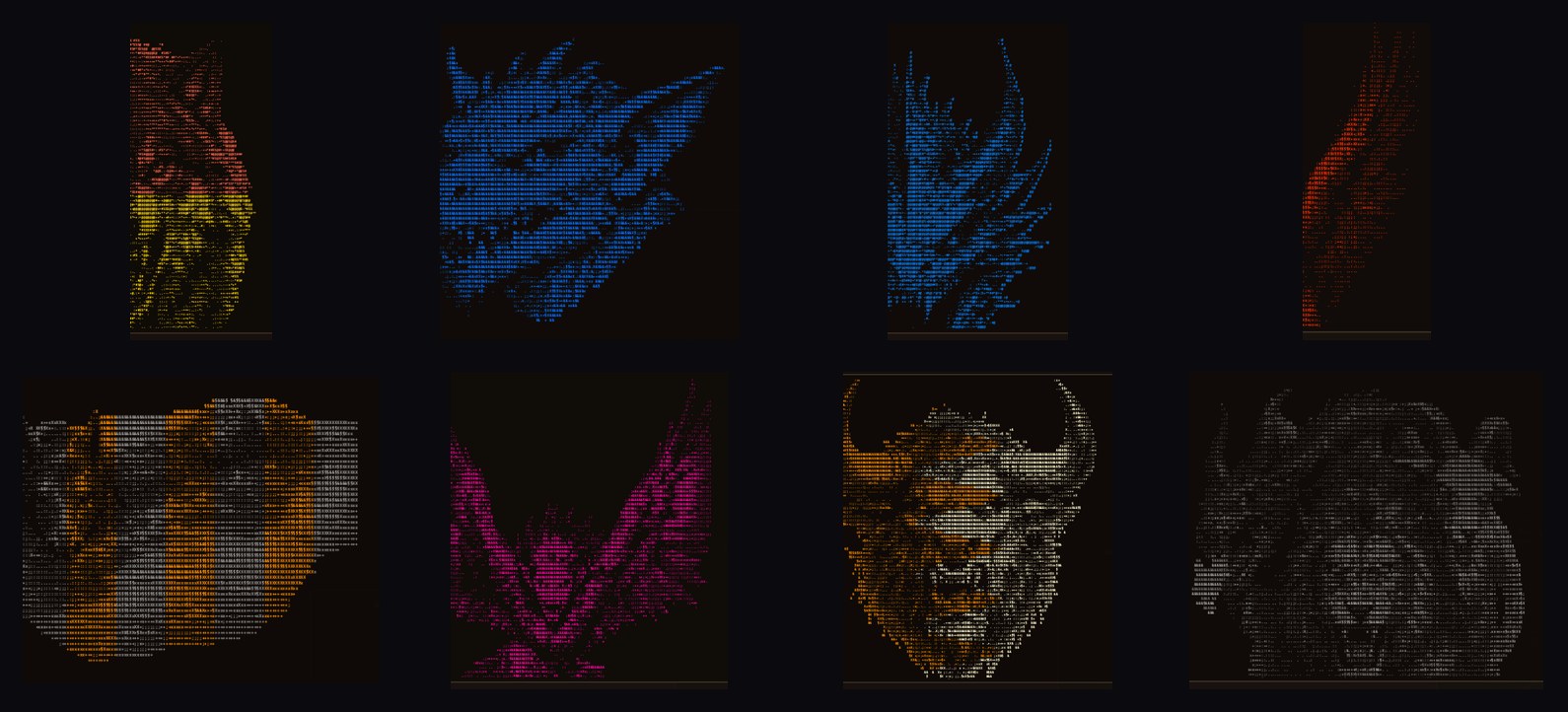
All of it is text. That is the point — and it reads better than it sounds.
Bring something back out alive
53 dungeons, one for every monster type, each with a boss, a Hard mode and a hazard of its own. They are the only place companion eggs come from — and a companion is the one thing that survives you. Fuse them, breed them, ascend a tier; they carry on with your next character.
Permadeath that means something
One life per character, no undo. Your Sanctuary keeps the companions and stored items, so dying costs you a person — not everything.
Cards, not a menu
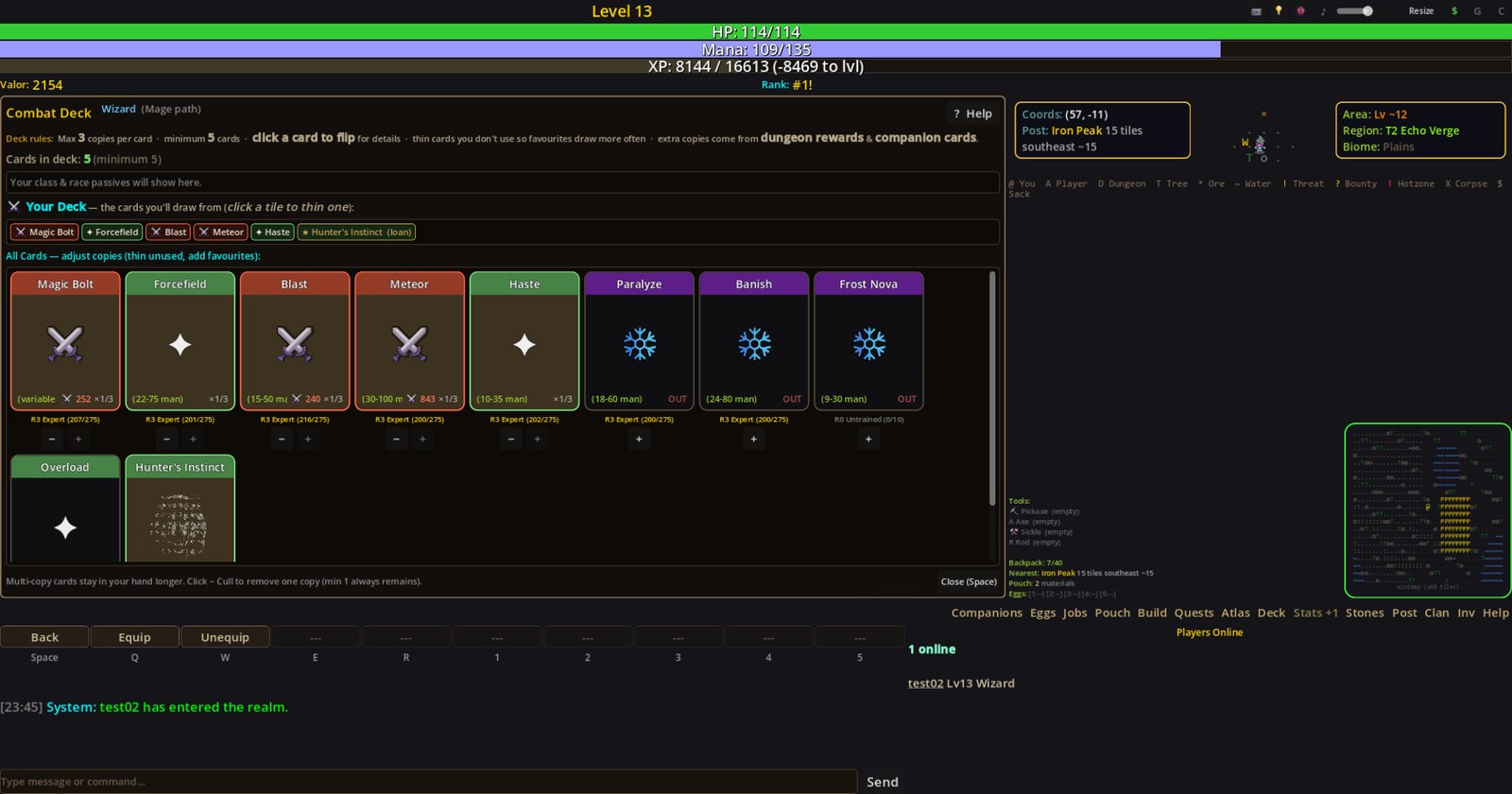
Combat deals you a fresh hand each round from a deck you build. Thin what you never play, keep copies of what you do, and rank cards up as you use them.
Gear that changes your cards
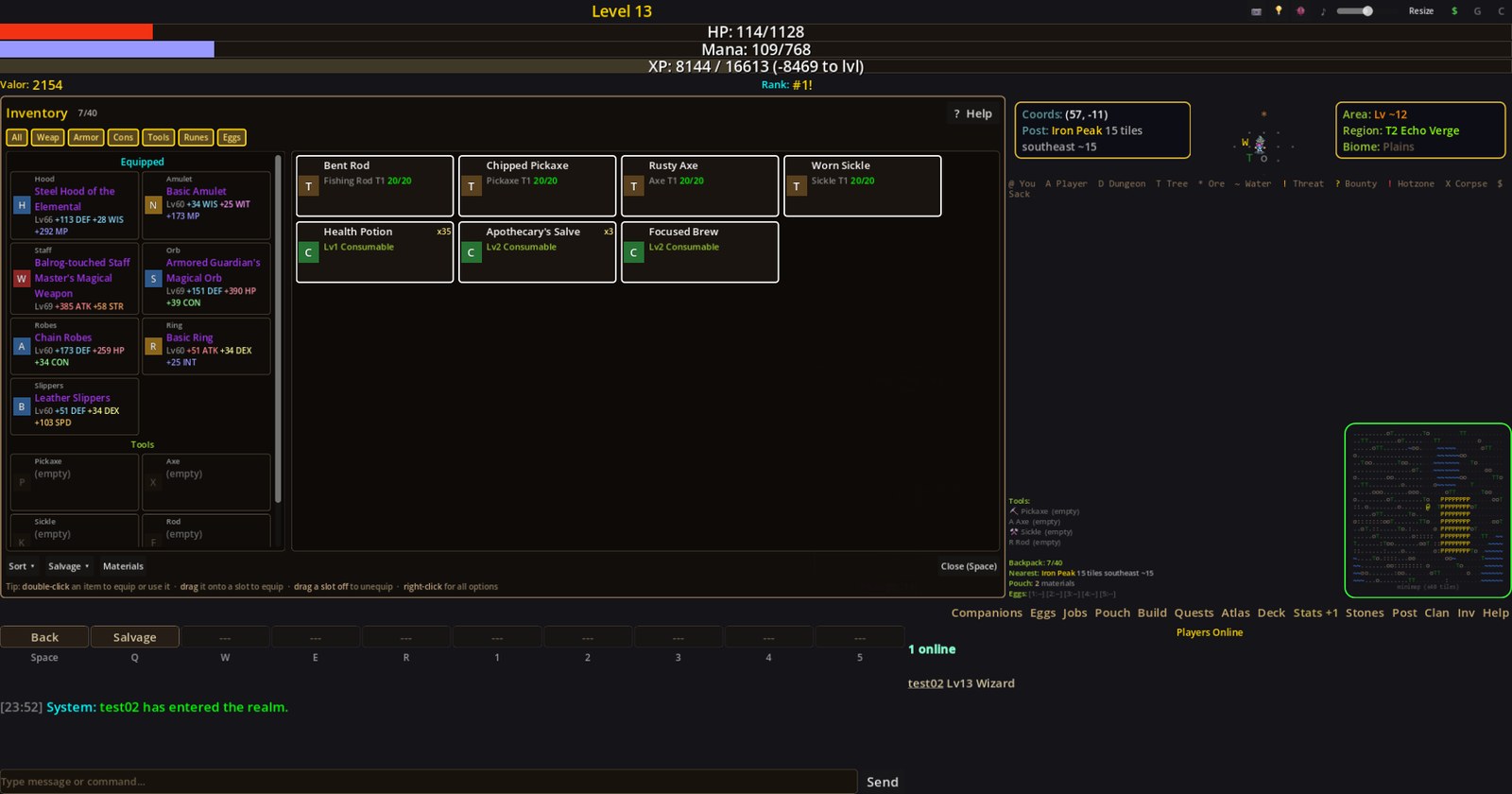
Nine slots, rarity tiers, rolled stats, uniques and set bonuses — plus affixes granting +X to ability ranks, so loot alters what your abilities do. It shows on your sprite, too.
Fight as a party of five
One shared enemy, simultaneous turns, buffs and items you can aim at allies. Leadership rotates after each fight so nobody is the pack mule.
53 dungeons
One per monster type, each with a boss, a Hard mode, its own hazard, and exclusive cards. Clearing one pushes the threat off a real town.
Companions that outlive you
Hatch them from dungeon eggs, fuse them, ascend a tier, breed a line. They pass to your next character through the Sanctuary.
9 classes, 3 paths
Warrior, Mage and Trickster, three classes each, with talent trees, unique gear, set bonuses and ability rank-ups to grow into.
A real economy
Player market with supply-and-demand pricing, roaming merchants that move stock between posts, direct trade, and five crafting skills.
Built to play with people
Clans with a shared vault, friends that survive permadeath, whisper and party channels, and a mentor bonus for taking new players out.
Most delvers don’t last two seasons
It’s free, there’s nothing to buy, and the launcher keeps you current.